Online Shia Quran classes are live Quran and Islamic education lessons taught over the internet by teachers who understand Shia beliefs, Fiqh-e-Jafria, and the teachings of the Ahlul Bayt (A.S.).
Instead of travelling to a mosque, madrasa, or Islamic centre, students connect with a Quran teacher from home through a laptop, tablet, computer, or mobile device. Lessons may cover Quran reading, Arabic pronunciation, Tajweed, Hifz, Quran Translation, Tafseer, Duas, Islamic Studies, and other subjects depending on the student’s age and learning goals.
For Shia families, the main advantage is not simply being able to read the Quran online. It is having access to Quran teachers who understand the student’s religious background and can provide Islamic learning within a Shia educational environment.
These classes are available for children, teenagers, adults, complete beginners, and students who already read the Quran but want to improve their recitation or deepen their understanding.
What Makes Online Shia Quran Classes Different?
The Holy Quran is the same for all Muslims, and fundamental Quran-reading skills such as Arabic letters, Makharij and Tajweed focus on correct recitation.
The distinction becomes particularly important when Quran learning is combined with Islamic education, religious practice, Tafseer, Duas, Fiqh, history, and understanding the teachings of Islam.
In Shia Quran classes, students can learn in an environment that respects the Ja’fari school of thought and the teachings transmitted through the Ahlul Bayt (A.S.).
Depending on the selected course, this may include:
Fiqh-e-Jafria.
Teachings of the Ahlul Bayt (A.S.).
Shia Islamic beliefs.
Duas and supplications.
Islamic manners and Akhlaq.
Shia history.
Practical religious guidance.
Quranic understanding within an appropriate Shia learning context.
This can be particularly important for parents who want their children to learn both Quran recitation and Islamic knowledge without receiving conflicting religious instruction.
How Do Online Shia Quran Classes Work?
Most online Quran lessons take place as live classes rather than prerecorded videos.
The student and teacher meet online at an agreed time. During the lesson, the teacher can listen to the student’s recitation, demonstrate correct pronunciation, explain Tajweed rules, correct mistakes, introduce new material, and answer questions.
The learning process normally begins with an assessment of the student’s current ability.
A complete beginner may be asked whether they recognise Arabic letters.
A student who already reads the Quran may recite a short passage so the teacher can identify pronunciation or Tajweed weaknesses.
A Hifz student may be assessed on memorisation and revision.
Someone interested in Islamic Studies, Translation or Tafseer may begin according to their existing knowledge and learning goals.
The teacher can then recommend the appropriate starting level.
For a more detailed explanation of registration, assessment, lesson structure and progress tracking, see the guide on how an online Shia Quran academy works.
Are Online Shia Quran Classes One-to-One?
One-to-one Quran learning means one teacher teaches one student during the lesson.
This format can be particularly useful for Quran recitation because the teacher needs to listen closely to the learner’s pronunciation.
In a private lesson, the student does not have to move at the speed of a large group.
If a particular Arabic sound is difficult, more time can be spent on it.
If the student already understands a topic, the teacher can move forward.
If a child requires repetition, the lesson can slow down.
For Tajweed students, individual attention allows the teacher to identify repeated Makharij, Madd, Ghunnah, Waqf or fluency mistakes more easily.
Adult learners can also ask questions privately without feeling uncomfortable about starting from the basics.
What Do Students Learn in Online Shia Quran Classes?
Online Shia Quran education can include several learning pathways.
The right course depends on whether the student is a complete beginner, Quran reader, Hifz student, child, teenager or adult.
Yassarnal Quran Qaida for Beginners
Students who cannot yet read Arabic usually begin with a Quran Qaida.
A beginner course teaches the skills required before reading complete Quranic verses.
Students may learn:
Arabic letters.
Letter sounds.
Harakaat.
Joined Arabic letters.
Makharij-ul-Huroof.
Sukoon and Shaddah.
Long vowels.
Basic Tajweed.
Simple Quranic words.
Guided Quran reading.
The goal is to develop the ability to recognise and pronounce Quranic Arabic rather than memorising words without understanding how they are formed.
Complete beginners can explore the Online Shia Yassarnal Quran Qaida Course.
Quran Reading With Tajweed
Students who can already recognise Arabic letters can progress toward reading the Holy Quran fluently and accurately.
Online Shia Quran classes with Tajweed focus on both reading and correct pronunciation.
Students may work on:
Makharij-ul-Huroof.
Correct Arabic pronunciation.
Madd.
Ghunnah.
Qalqalah.
Noon Sakinah and Tanween.
Meem Sakinah.
Waqf and stopping.
Reading fluency.
Common recitation errors.
The benefit of a live teacher is immediate correction.
If a letter is being pronounced from the wrong articulation point, the teacher can demonstrate the correct sound and ask the learner to repeat it until the pronunciation improves.
Students who want to focus specifically on recitation can study Quran with Tajweed online.
Online Shia Hifz Quran Classes
Hifz is another common area of online Quran learning.
Memorising the Holy Quran requires more than learning new verses each day. Students also need a reliable revision system.
A structured Hifz class normally includes:
New memorisation.
Recent revision.
Older revision.
Tajweed correction.
Recitation checks.
Retention monitoring.
The amount of new material should be adapted to the student’s age, memory, available study time and previous progress.
For children especially, strong revision is usually more important than simply increasing the number of new verses.
Students interested in memorisation can explore the Online Shia Hifz Quran Program.
Quran Translation Classes
Being able to recite the Quran is an important skill, but many students eventually want to understand what they are reading.
Quran Translation classes help students move from pronunciation toward meaning.
Lessons may introduce the meanings of verses, important Quranic vocabulary, themes within a passage, and practical guidance contained in the text.
Translation is especially useful for teenagers and adults who already read Quran and want to develop a closer intellectual and spiritual connection with it.
Students who have reached this stage can explore the Quran with Translation course.
Online Shia Quran Tafseer
Tafseer goes deeper than direct translation.
While translation tells the reader what a verse broadly means, Tafseer helps explain its context, themes, lessons, relationships with other verses, and relevant Islamic teachings.
In a Shia learning environment, Quranic explanation may also draw attention to teachings transmitted through the Prophet Muhammad ﷺ and the Ahlul Bayt (A.S.).
Because Tafseer involves deeper Quranic study, it is generally more appropriate for learners who already have a foundation in Islam and Quran reading.
Those ready for deeper study can continue with Quran Tafseer classes.
Shia Islamic Studies for Children
For many parents, Quran learning is only one part of Islamic education.
Children also need age-appropriate guidance about what Muslims believe and how those beliefs influence everyday life.
Shia Islamic Studies may introduce:
Basic Aqeedah.
Ahlul Bayt (A.S.).
Prophets.
Islamic history.
Daily Duas.
Akhlaq and manners.
Salah and worship.
Islamic values.
Important religious occasions.
Practical Fiqh for children.
Respect for parents and family.
These lessons can help children connect Quran learning with their religious identity rather than viewing Quran class only as Arabic-reading practice.
Parents can learn more about Shia Islamic Studies Online for Kids.
Fiqh-e-Jafria in Online Shia Learning
One reason families specifically search for Shia Quran teachers online is that religious questions may arise naturally during classes.
Children and adults may ask about Wudu, Salah, fasting, religious obligations, Duas, or other aspects of Muslim practice.
Where appropriate to the course and teacher’s qualifications, Islamic instruction can be provided within the framework of Fiqh-e-Jafria.
This means students can study in an environment familiar with the Ja’fari school rather than repeatedly having to explain their religious background.
For detailed or personal religious rulings, students should follow the guidance of the qualified religious authority or Marja they follow.
Nahjul Balagha and Advanced Shia Studies
Some online Shia learning programmes extend beyond basic Quran recitation.
Older students and adults may want to study Nahjul Balagha, the well-known collection associated with the sermons, letters and sayings of Imam Ali (A.S.).
Guided study can explore themes such as:
Justice.
Leadership.
Character.
Spirituality.
Ethics.
Responsibility.
Human relationships.
Personal development.
Learners interested in this area can explore the Nahjul Balagha Online Course.
Who Can Join Online Shia Quran Classes?
One advantage of online Quran learning is that location and age create fewer restrictions.
Children
Young learners can begin with Arabic letters, Yassarnal Qaida, short Surahs, basic Quran reading and age-appropriate Islamic knowledge.
One-to-one lessons can be adjusted to a child’s concentration span and learning pace.
Teenagers
Teenagers may work on Quran fluency, Tajweed, Hifz, Translation, Islamic Studies or more advanced subjects according to their existing level.
Adults
Adults can begin from Arabic letters even if they never had the opportunity to learn Quran properly as children.
There is no age at which someone becomes too old to improve Quran recitation.
Women and Girls
Women and girls who prefer learning from female tutors can study Quran and Islamic subjects through private online lessons.
Students can explore available female Shia Quran teachers.
Boys and Adult Men
Boys, brothers and adult men may choose male tutors for Quran reading, Tajweed, Hifz or Islamic Studies.
The available options can be viewed on the male Shia Quran teachers page.
Can Complete Beginners Learn Quran Online?
Yes.
A student does not need previous Arabic knowledge to begin.
A good beginner Quran programme starts from the learner’s actual level rather than assuming they can already read.
Someone who cannot recognise Arabic letters can start with the alphabet.
A learner who recognises letters but struggles with joined words can begin from that stage.
Another student may read reasonably well but require Makharij and Tajweed correction.
This level-based approach makes online learning suitable for both absolute beginners and returning learners.
Benefits of Online Shia Quran Classes
Access to Shia Quran Teachers
Families living in areas with a small Shia community may not have a suitable teacher nearby.
Online learning removes much of that geographical limitation.
Flexible Class Timings
Classes can be arranged around school, university, work and family commitments.
This is particularly useful for international students living in different time zones.
Individual Attention
Private lessons allow the teacher to focus on the student’s actual mistakes instead of teaching the same material to an entire group.
Learning From Home
Students do not need to travel several times each week to attend Quran lessons.
Male and Female Teacher Options
Families and adult students can choose an appropriate teacher according to their preferences and course requirements.
A Wider Range of Courses
A learner can begin with Qaida and later progress into Tajweed, Hifz, Translation, Tafseer or Islamic Studies without having to search for a completely new learning system.
You can compare the available pathways on the Online Shia Quran Courses page.
What Happens During a Typical Online Shia Quran Lesson?
The exact lesson depends on the course, but a Quran-reading session may follow a simple structure.
The teacher first reviews material from the previous lesson.
The student then reads the assigned Quran or Qaida portion.
The teacher listens carefully and corrects pronunciation or Tajweed mistakes.
Difficult letters or words are repeated.
New material is introduced once the previous section is sufficiently understood.
The teacher may then provide a revision target or homework for the next lesson.
An Islamic Studies or Tafseer lesson will naturally have a different structure, with more explanation, discussion and questions.
The important difference between live classes and prerecorded material is interaction: students can ask for clarification immediately.
What Technology Is Needed?
Online Quran lessons generally require only basic equipment.
A student typically needs:
A laptop, computer, tablet or suitable smartphone.
A reliable internet connection.
A microphone.
Speakers or headphones.
A quiet learning environment.
Video-conferencing or online classroom software may be used to connect the student and teacher.
A headset can be particularly useful during Tajweed classes because clear audio makes subtle pronunciation differences easier to hear.
How Do You Choose the Right Online Shia Quran Classes?
Do not select a Quran class only because it is inexpensive.
Consider the quality of the complete learning experience.
Check whether the teacher has appropriate Quran knowledge.
Look for experience teaching the student’s age group.
Confirm whether classes are live.
Ask whether the student receives individual correction.
Check whether male and female teachers are available if that matters to your family.
Make sure the curriculum matches the student’s level.
For Islamic subjects, verify that the teaching environment follows the Shia approach you are seeking.
Consider class timings and consistency.
Try the teaching method before making a long-term commitment where possible.
For a more detailed checklist, read How to Choose the Best Shia Quran Academy Online.
Frequently Asked Questions About Online Shia Quran Classes
What are online Shia Quran classes?
Online Shia Quran classes are live internet-based lessons where students learn Quran reading, Tajweed, Hifz, Translation, Tafseer or Islamic Studies with teachers who understand Shia beliefs, Fiqh-e-Jafria and the teachings of the Ahlul Bayt (A.S.).
Are online Shia Quran classes only for children?
No. Children, teenagers and adults can all study online. Complete beginners can also begin from Arabic letters and Qaida.
Are Shia Quran classes different from regular online Quran classes?
Core Quran recitation skills such as Arabic pronunciation and Tajweed focus on accurate reading of the same Holy Quran. The Shia distinction becomes particularly relevant in Islamic Studies, Fiqh, Tafseer, history, Duas and teachings connected with the Ahlul Bayt (A.S.).
Can I learn Quran from a female Shia teacher?
Yes. Female teachers can provide online Quran instruction for girls, sisters, children and adult women depending on the teacher’s course specialisation and availability.
Can beginners start without knowing Arabic?
Yes. Beginners can start with Yassarnal Quran Qaida and learn Arabic letters, sounds, Harakaat, Makharij and joined-letter reading before moving toward Quran recitation.
Can students memorize the Quran online?
Yes. Hifz can be taught online through live recitation, memorisation targets, regular revision, Tajweed correction and retention checks.
Can adults improve old Tajweed mistakes online?
Yes. One-to-one online Tajweed lessons can be useful for adults because the tutor can identify recurring pronunciation and Makharij errors and work on those specific areas.
Are online Shia Quran lessons live or recorded?
Live lessons provide direct teacher-student interaction, allowing immediate recitation correction, questions and personalised guidance. Some learning resources may be used between lessons, but interactive live instruction is especially valuable for Quran recitation.
How many classes should a student take each week?
There is no single schedule suitable for everyone. The right frequency depends on age, course, goals, school or work commitments, and how much practice the learner can maintain between sessions.
Can I try online Shia Quran classes before enrolling?
Students who want to experience the learning format can begin through the 3-Day Free Trial and discuss their level, preferred course and teacher requirements before regular enrollment.
Start Your Online Shia Quran Learning Journey
Online Shia Quran classes make Quranic and Islamic education accessible to students who may not have a suitable Shia teacher nearby.
A complete beginner can start with Arabic letters.
A Quran reader can improve Tajweed.
A Hifz student can work on memorisation and revision.
Teenagers and adults can move into Translation, Tafseer, Islamic Studies or Nahjul Balagha.
The most important step is choosing a learning path that matches your current level instead of trying to study everything at once.
Start with the foundation you need, learn consistently, practise between lessons, and gradually progress toward stronger Quran recitation and deeper Islamic understanding.
For students who want to experience live one-to-one learning first, book a 3-Day Free Trial.
Related Posts
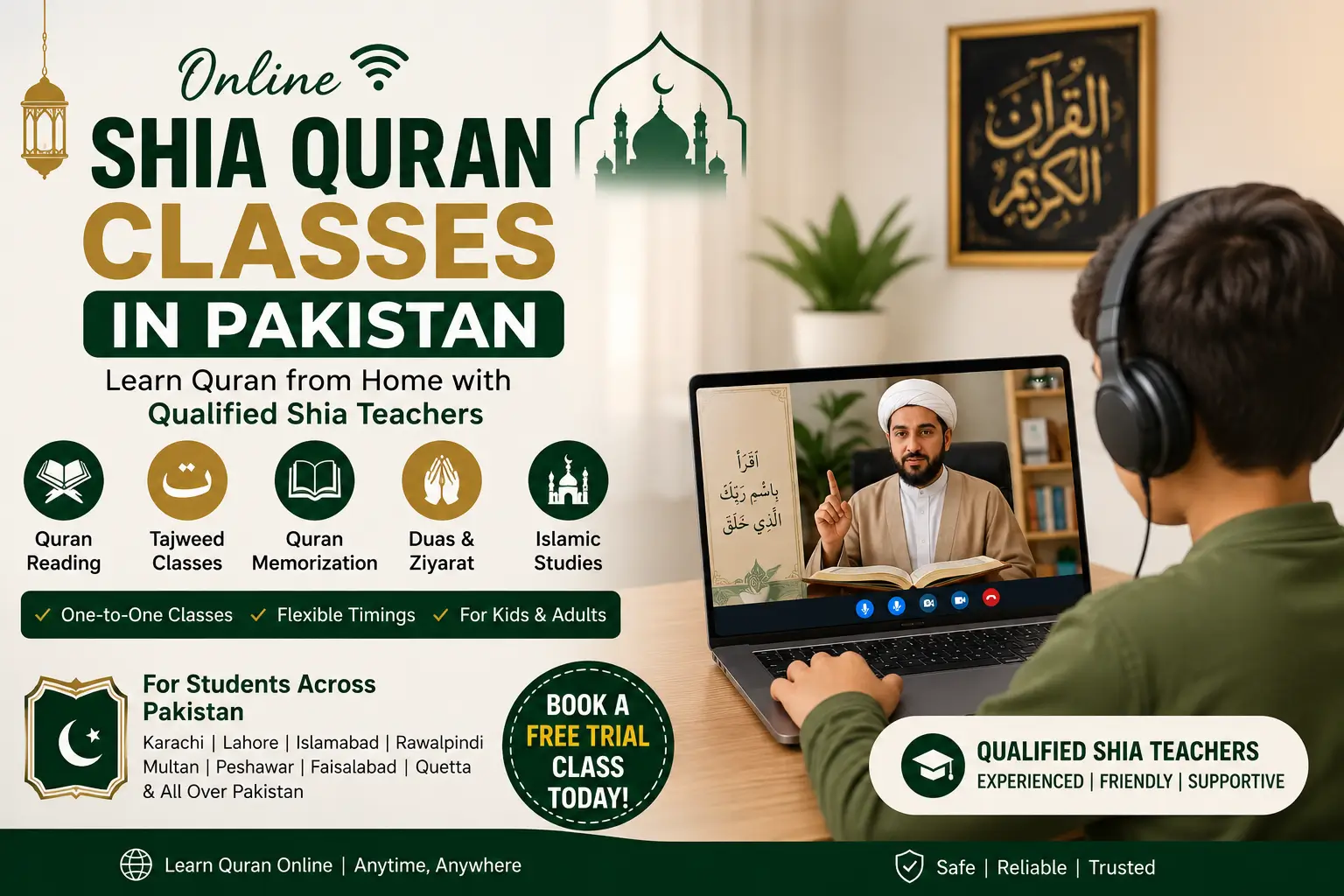
Online Shia Quran Classes in Pakistan
Online Shia Quran Classes in Pakistan | Learn Quran from…
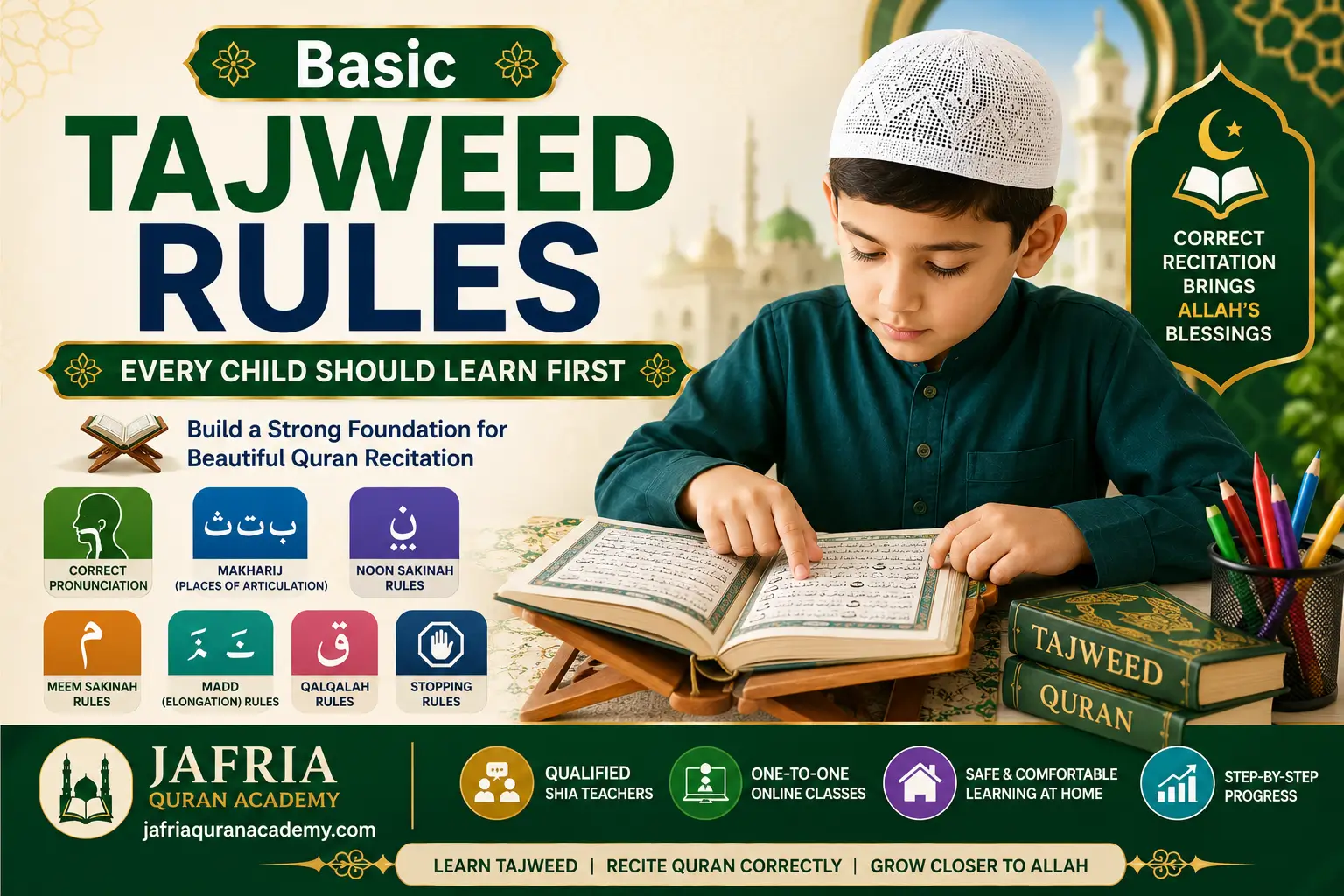
Basic Tajweed Rules Every Child Should Learn First
Introduction: Why Learning Tajweed Is Important for Children The Holy…
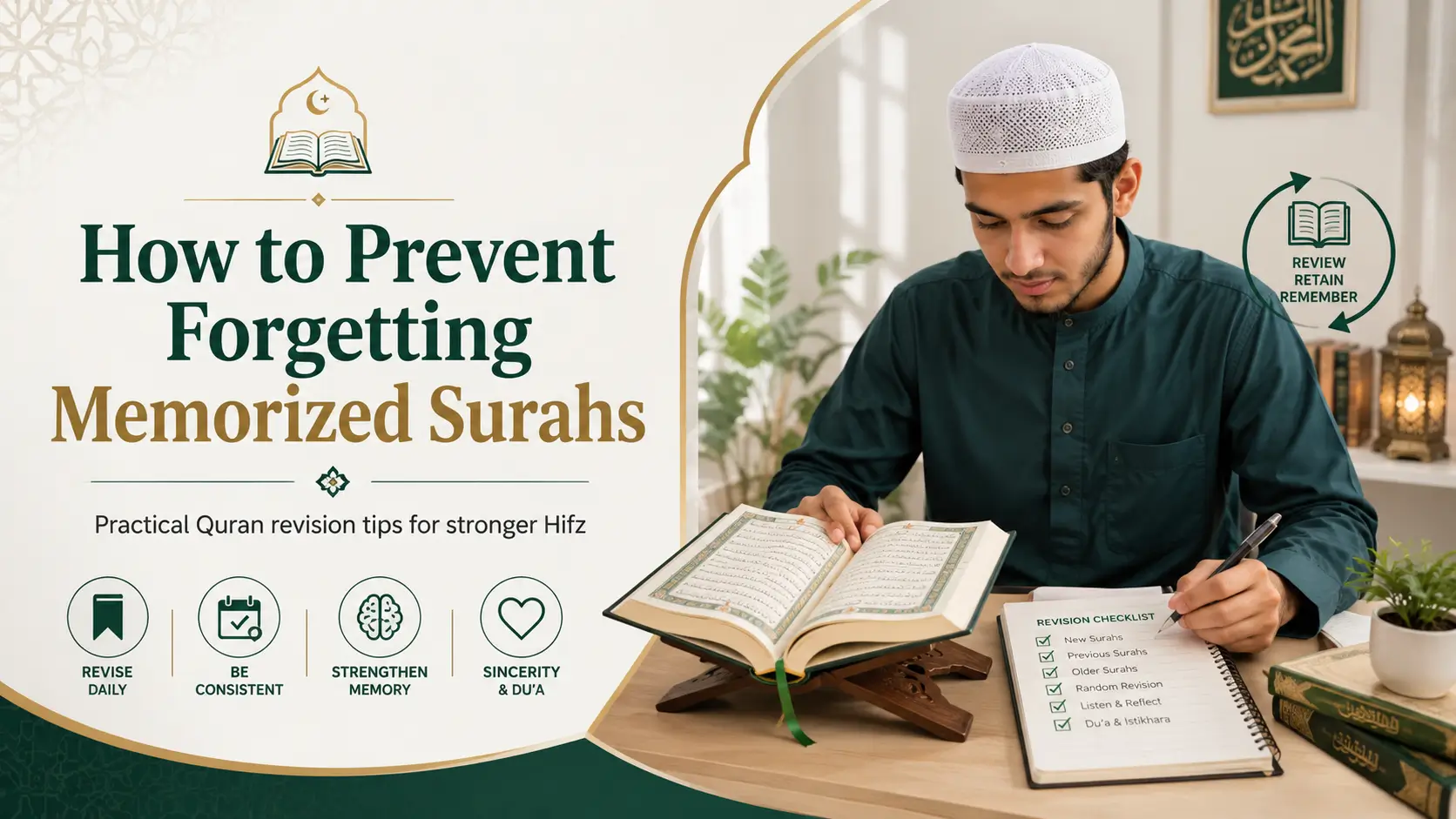
How to Prevent Forgetting Memorized Surahs: A Practical Quran Revision Guide
How to Prevent Forgetting Memorized Surahs: A Practical Quran Revision…