Online Quran Classes for Shia Children
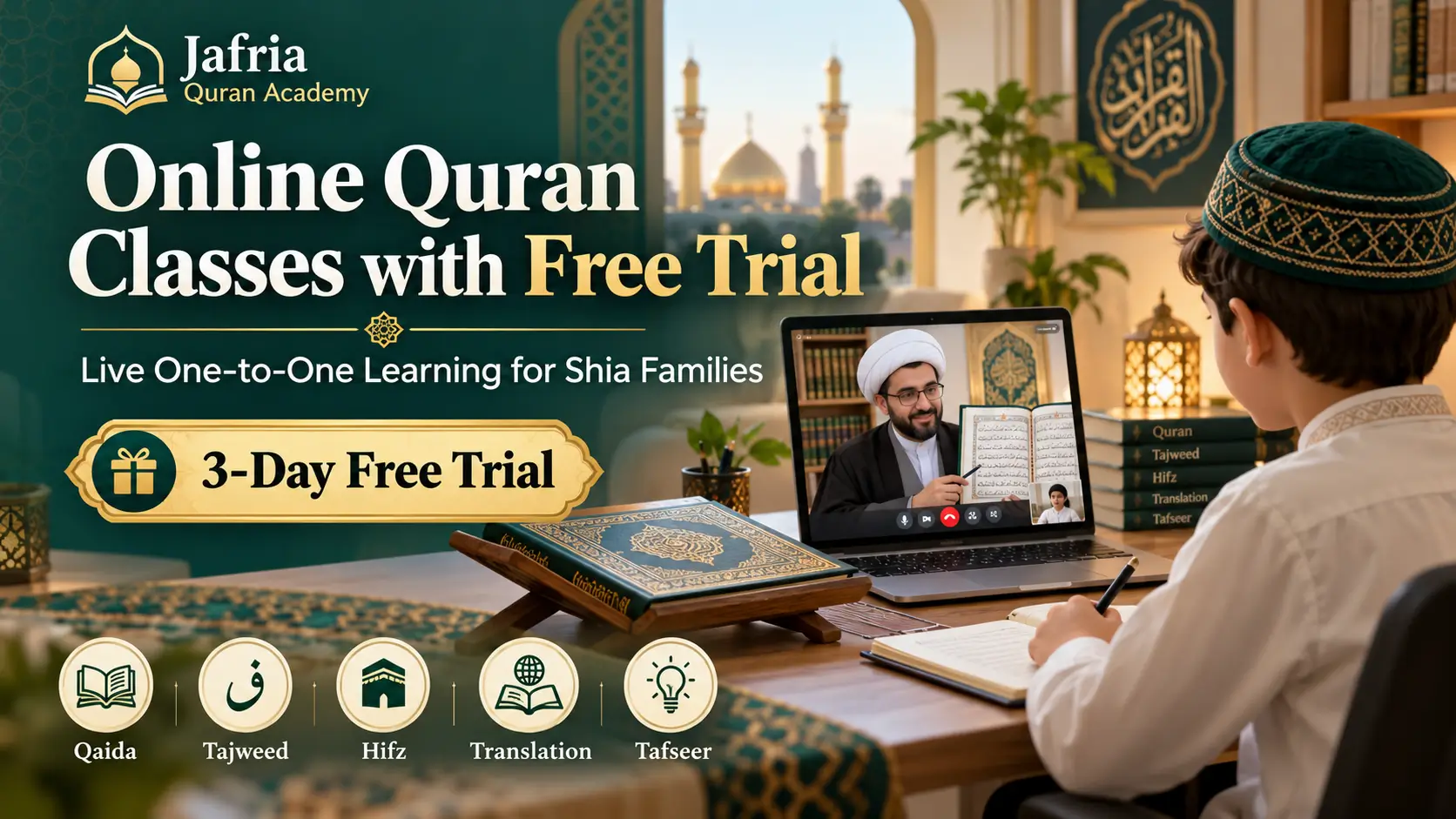
Finding reliable online Quran classes for Shia children can be challenging, especially for families who do not have access to a suitable Shia mosque, madrasa or Quran teacher nearby. Parents want more than a child who can simply read Arabic words. They want their children to recite the Holy Quran correctly, understand the teachings of Islam and develop a strong connection with Allah, the Holy Prophet Muhammad (PBUH) and the Ahlul Bayt (A.S.). Jafria Quran Academy provides live online Quran and Islamic Studies classes for Shia children through qualified male and female teachers. Lessons are delivered individually, allowing each child to learn according to their age, ability and existing Quran knowledge. Children can study Yassarnal Quran Qaida, Quran reading with Tajweed, Hifz, Quran translation, Tafseer, Islamic Studies and Fiqh-e-Jafria from the comfort of home. What Are Online Quran Classes for Shia Children? Online Quran classes for Shia children are live lessons designed to teach Quran recitation and Islamic knowledge within the beliefs and practices of the Shia Muslim community. Classes usually take place through platforms such as Zoom, Microsoft Teams or another secure video-learning system. During each session, the teacher listens to the child, corrects mistakes and introduces new material step by step. Unlike recorded courses, live lessons allow children to ask questions and receive immediate guidance. Depending on the selected programme, a child may learn: The purpose is to combine Quran-reading skills with meaningful religious education. Why Shia Families Choose Online Quran Learning Many Shia families live in places where suitable local tuition is limited. A nearby mosque may not offer children’s classes, while another provider may not teach Islamic Studies according to Fiqh-e-Jafria. Online learning helps remove that location barrier. A child in the UK, USA, Canada, Australia, Europe or another region can learn with a Shia Quran teacher without travelling long distances. Parents can also choose class times that fit around school, homework, family commitments and local time zones. Access to Shia Quran teachers The strongest reason for choosing a specialist academy is access to teachers who understand Shia beliefs and practices. This becomes especially important when lessons include: Parents do not need to explain their beliefs to a teacher unfamiliar with their tradition. Instead, Quran recitation and Islamic Studies can be taught within a familiar religious framework. Convenient learning from home Online classes remove the need to travel to a madrasa several times each week. This can help families who: The child can attend class using a computer, tablet or suitable mobile device with a stable internet connection. Individual teacher attention In a large group class, a teacher may have limited time to listen to every child carefully. One-to-one online lessons create more opportunities for direct correction. The teacher can identify whether the child is struggling with letter recognition, blending, Makharij, fluency, Tajweed or revision. The pace can then be adjusted accordingly. A complete beginner may spend more time on Arabic letters, while an experienced reader can focus on advanced recitation or memorisation. What Children Learn in Our Online Shia Quran Classes Every child should begin at the correct level rather than being placed into a standard programme based only on age. A beginner needs a strong reading foundation. By contrast, a child who already reads from the Mushaf may need Tajweed correction, fluency practice or Hifz support. Yassarnal Quran Qaida for beginners The Yassarnal Quran Qaida course introduces children to the foundations of Quran reading. Children gradually learn: The teacher should not rush a child through the Qaida simply to finish it. A strong foundation makes future Quran reading easier. Therefore, children should move forward when they can recognise and read the material with reasonable confidence. Quran reading with Tajweed After developing basic decoding skills, children can begin reading directly from the Holy Quran. During live Tajweed lessons, the teacher listens to each passage and corrects pronunciation in real time. Children may study: Tajweed should be introduced gradually. Giving a young learner too many technical rules at once may cause confusion. Instead, the teacher can demonstrate a rule, practise it in selected words and help the child apply it during recitation. Hifz and Quran memorisation Children who are ready for memorisation can study selected surahs, Juz Amma or a wider Hifz programme. A structured Hifz lesson usually includes: Revision, also known as muraja’ah, is essential. Learning new verses without reviewing previous portions can lead to weak retention. For that reason, a suitable Hifz plan should reflect the child’s memory, school timetable and ability to revise consistently. Quran translation and Tafseer Reading Arabic is important, but children should also begin understanding the message of the Quran at an age-appropriate level. Translation and Tafseer lessons can help children explore: Young children do not need highly technical explanations. Clear stories, examples and practical lessons are usually more effective. Shia Islamic Studies for children Islamic Studies helps children connect Quran learning with everyday faith and practice. A child’s programme may include: Lessons should be adapted to the child’s age. Younger learners may benefit from stories and visual activities, while older children can explore beliefs, history and practical rulings in greater depth. Online Quran Classes by Age and Learning Stage Children should not all receive the same lesson length, homework or teaching style. Age or stage Suitable learning focus Suggested lesson approach Ages 3–5 Listening, Arabic sounds, short surahs and duas Short, playful lessons Ages 5–7 Yassarnal Qaida, letter joining and pronunciation Structured beginner lessons Ages 7–10 Quran reading, Tajweed and Islamic Studies Regular guided practice Ages 10–13 Fluency, Hifz, translation and Fiqh Goal-based lessons Teenagers Tajweed correction, Tafseer, Hifz and deeper studies Personalised programme Late beginners Qaida, Al-Fatihah and core reading skills Respectful one-to-one support These age ranges are flexible. Readiness and previous experience are more important than a child’s exact birthday. What Is the Best Age to Start? Many children can begin structured Quran lessons between the ages of four and seven. However, Quran exposure may begin much earlier through listening, stories, duas and family recitation. A