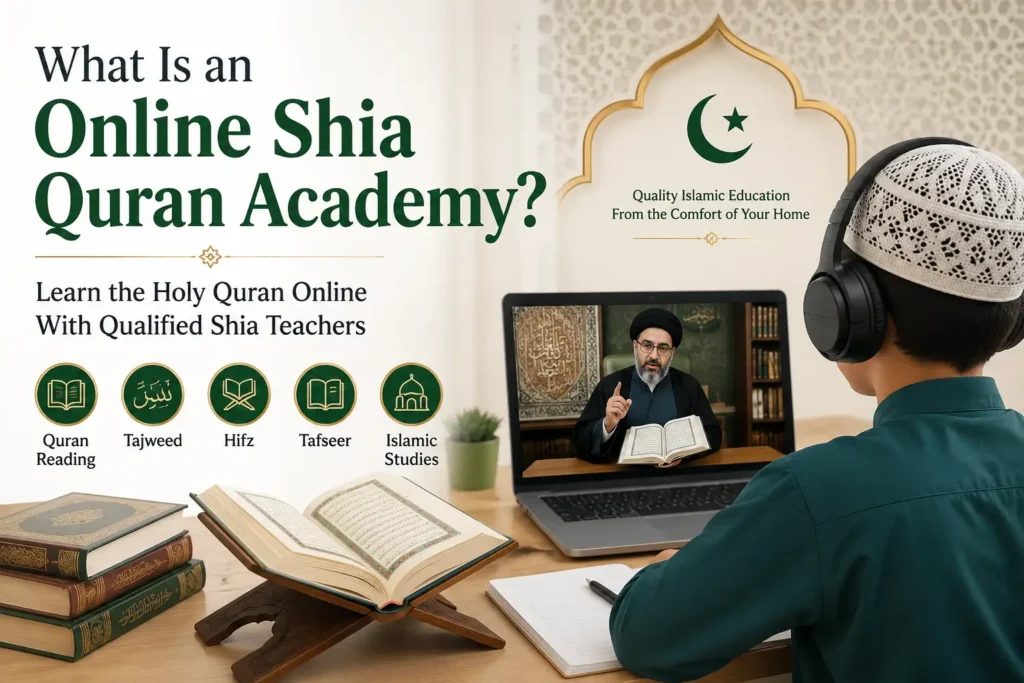
An online Shia Quran academy is a digital learning platform where children and adults can study the Holy Quran with qualified Shia teachers from the comfort of their homes. Classes are usually conducted live through video-calling platforms, allowing students to communicate directly with their teachers, practise Quran recitation and receive immediate corrections.
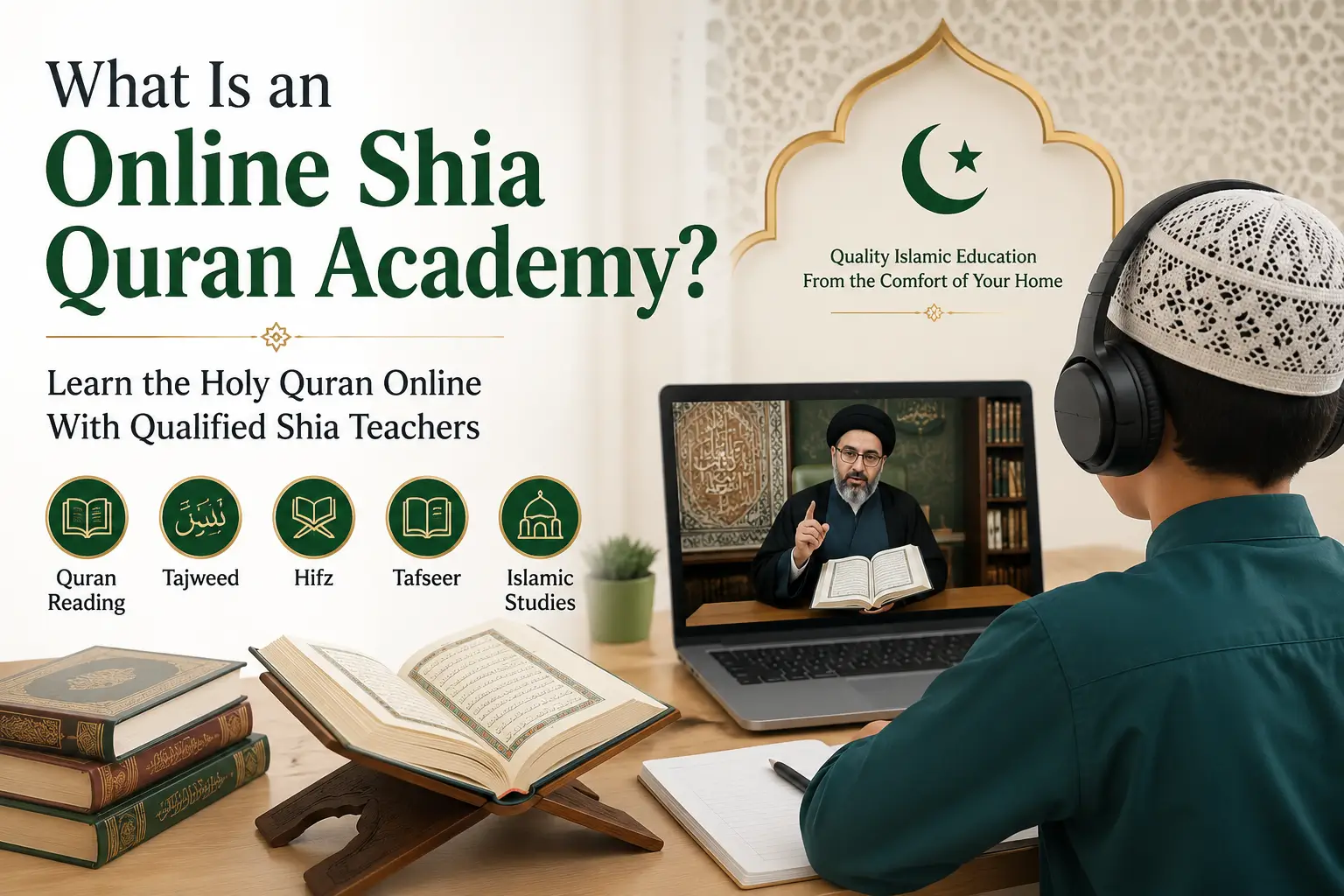
Unlike general online Quran programs, a Shia Quran academy teaches the Quran alongside the beliefs, values and religious guidance associated with the school of Ahlul Bayt. Students can learn Quran reading, Tajweed, memorization, translation, Tafseer and basic Islamic studies according to their age and learning level.
Jafria Quran Academy provides an accessible way for Shia families to continue their Quranic education regardless of where they live.
How Does an Online Shia Quran Academy Work?
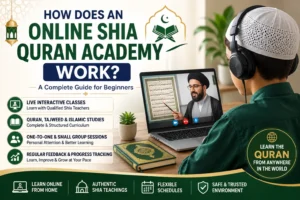
An online Shia Quran academy works much like a traditional Quran learning centre, but lessons are delivered remotely. Students attend live classes using a computer, tablet or smartphone with an internet connection.
After registration, the academy usually assesses the student’s current Quran reading ability. This helps the teacher decide whether the learner should begin with basic Arabic letters, Quran reading, Tajweed, memorization or a more advanced course.
Students can then attend scheduled lessons with an assigned teacher. During each class, the teacher listens to the student’s recitation, corrects pronunciation mistakes, explains relevant rules and gives work for further practice.
Because lessons are live and interactive, students are not simply watching prerecorded videos. They can ask questions, repeat difficult words and receive personal guidance throughout the class.
What Can Students Learn at an Online Shia Quran Academy?
The exact curriculum can differ between academies, but students may study several Quranic and Islamic subjects.
Basic Quran Reading
Beginners usually start by learning Arabic letters, their sounds and how they connect to form words. A basic Quran reading course helps students develop the foundation needed to recite the Holy Quran correctly.
Young children and adults who have never studied Arabic can begin at this level.
Quran Recitation with Tajweed
Tajweed teaches students how to pronounce Quranic letters correctly and apply the rules of recitation. It includes areas such as Makharij, Madd, Qalqalah, Noon Sakin, Tanween and Meem Sakin.
Learning with a live teacher is particularly useful because the teacher can hear pronunciation errors that students may not recognize themselves.
Quran Memorization
Students who want to memorize selected surahs, parts of the Quran or the complete Quran can join a structured memorization program.
A teacher helps the student divide the lesson into manageable portions, revise previously memorized passages and maintain correct pronunciation during Hifz.
Quran Translation and Tafseer
Reading the Quran correctly is important, but understanding its message is also essential. Translation and Tafseer classes help students explore the meanings, lessons and guidance contained in Quranic verses.
In an online Shia Quran academy, these lessons may be explained according to the teachings and interpretations transmitted through the Ahlul Bayt.
Shia Islamic Studies
Many students also require guidance in basic Shia Islamic education. Depending on the available curriculum, lessons may include:
- Fiqh Jafria
- Shia beliefs and Aqaid
- Salah and Wudu
- Duas and Ziyarat
- Islamic manners and character
- The lives of the Prophet and Ahlul Bayt
- The teachings of the Twelve Imams
These subjects help students connect Quran learning with their everyday religious responsibilities.
How Is a Shia Quran Academy Different?
The main difference is that a Shia Quran academy provides Quranic education within a Shia Islamic learning environment.
Students learn from teachers who understand Shia beliefs, practices and religious terminology. This is particularly important for families who want their children to receive guidance consistent with the teachings of the Prophet Muhammad and his Ahlul Bayt.
A Shia Quran academy may also include subjects that are not normally covered in a standard Quran reading course, such as Fiqh Jafria, Shia Aqaid, Nahjul Balagha, Duas and the lives of the Imams.
The objective is not only to help students pronounce Quranic words correctly but also to strengthen their understanding of Islam and their relationship with Allah.
Who Can Join an Online Shia Quran Academy?
Online classes can be suitable for students of different ages and educational backgrounds.
Children
Children can start with basic Arabic letters, short surahs, daily duas and simple Islamic teachings. A patient teacher can adjust the lesson according to the child’s age, attention span and reading ability.
Adults
Adults who did not have an opportunity to learn the Quran earlier can begin from the basic level without feeling embarrassed. They can choose private lessons and progress at a comfortable pace.
Beginners
Students do not need previous Arabic or Quran-reading experience. A beginner can start with basic sounds and gradually move towards fluent Quran recitation.
Advanced Students
Learners who can already read the Quran may focus on Tajweed, Hifz, translation, Tafseer or advanced Islamic studies.
Shia Families Living Abroad
Shia families living in countries where local Islamic learning facilities are limited can connect with suitable teachers online. This enables children to receive consistent Quranic and religious education without travelling long distances.
Benefits of Learning Through an Online Shia Quran Academy
One of the greatest benefits of online Quran learning is accessibility. Students can attend classes from home, which is helpful for families with busy schedules or limited access to a nearby Shia Islamic centre.
Online learning can also provide:
One-to-One Attention
Private classes allow the teacher to focus on one student’s pronunciation, progress and learning difficulties. The lesson can move faster or slower depending on the student’s ability.
Flexible Class Timings
Students may be able to choose lesson timings that fit around school, work and family commitments. This is especially useful for international students living in different time zones.
A Comfortable Learning Environment
Children and adults can study from a familiar environment without travelling. Parents can also observe their children’s lessons and monitor their progress.
Access to Male and Female Teachers
Families may be able to select a male or female Quran teacher according to the student’s age, preference and learning needs.
Regular Progress
Short but consistent lessons can help students build strong Quran-reading habits. Regular interaction with a teacher also encourages discipline and accountability.
Are Online Shia Quran Classes Effective?
Online Shia Quran classes can be effective when they are live, structured and supported by regular practice.
The quality of learning depends on several factors, including the teacher’s experience, the student’s attendance, the lesson plan and the amount of practice completed outside class.
Parents can improve a child’s progress by providing a quiet learning space, checking homework and encouraging daily revision. Adult students should also practise regularly instead of relying only on their scheduled lessons.
Online classes are most successful when the teacher and student communicate clearly and follow a consistent learning schedule.
What Do Students Need for Online Quran Classes?
Students normally need only a few basic things:
- A smartphone, tablet, laptop or computer
- A stable internet connection
- A microphone and speakers or headphones
- A Quran or relevant learning book
- A quiet place for the lesson
- A suitable video-calling application
Young children may also need help from a parent during the first few classes while they become familiar with the online learning system.
How to Choose the Right Online Shia Quran Academy
Before enrolling, families should consider the quality of the teachers, curriculum and learning system.
A suitable academy should provide teachers who can communicate clearly, correct Quran recitation patiently and understand Shia Islamic teachings. The academy should also offer courses appropriate for different ages and learning levels.
Parents may ask the following questions:
- Are classes private or group-based?
- Are male and female teachers available?
- How long is each lesson?
- How many lessons are recommended each week?
- Which Shia Islamic subjects are included?
- How is student progress monitored?
- Are timings flexible for international students?
The right academy should provide a respectful, supportive and organized learning environment.
Learn the Quran Online with Jafria Quran Academy
Jafria Quran Academy aims to make Quranic and Shia Islamic education accessible to students wherever they live. Through live online lessons, learners can improve their recitation, study Tajweed, develop their Quranic understanding and strengthen their connection with the teachings of Ahlul Bayt.
Whether you are looking for Quran classes for your child, beginning Quran reading as an adult or seeking structured Shia Islamic education, online learning provides a flexible and convenient solution.
Visit jafriaquranacademy.com to explore the available courses and begin your Quran-learning journey.
Frequently Asked Questions
Q1: What is an online Shia Quran academy?
It is an online educational platform where students learn Quran reading, Tajweed, memorization, translation, Tafseer and Shia Islamic studies through live lessons with Shia teachers.
Q2: Can beginners join online Shia Quran classes?
Yes. Beginners can start by learning Arabic letters, pronunciation and basic Quran reading before progressing to complete Quran recitation.
Q3: Are online Shia Quran classes suitable for children?
Yes. Lessons can be adapted according to a child’s age, reading ability and attention span. One-to-one classes can provide children with greater individual support.
Q4: Can adults learn the Quran online?
Yes. Adults can begin from any level and study privately according to their availability and learning pace.
Q5: What is taught besides Quran reading?
Depending on the academy, students may learn Tajweed, Hifz, Quran translation, Tafseer, Fiqh Jafria, Aqaid, Salah, Duas and teachings related to the Ahlul Bayt.
Q6: Do students need to know Arabic before joining?
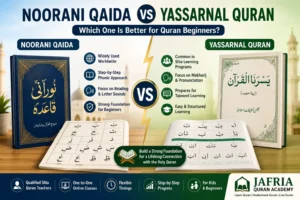
No. Students with no previous Arabic knowledge can begin with a basic Qaida or introductory Quran-reading course.
Q7: How many online Quran classes should a student take weekly?
The ideal number depends on the student’s age, goals and availability. Consistent lessons combined with daily practice usually produce better results than irregular study.